
GST Network on Saturday said beginning the July tax period, GST taxpayers will not be able to file monthly and annual GST returns after three years of the original filing due date. The July 2025 tax period means taxpayers will file

Some of the key names include: Maruti, M&M, Ashok Leyland, Britannia, Ultratech, JK Cement, Havells, Voltas, Amber, Metro, Trent, LemonTree, Indian Hotels, Niva Bupa, HDFC Life, IGL, Acme Solar, Suzlon, Swiggy, Delhivery, ICICI Bank, HDFC Bank, Bajaj Finance, Shriram Finance," according to a report by Motilal Oswal Financial Services.

The revised guidelines are aimed at curbing discretionary practices by field officers, especially the tendency to seek documents not mandated under the law.

The income tax department on Saturday extended the deadline for filing income tax returns by corporates by 15 days till November 15 for assessment year 2024-25. In a circular, the Central Board of Direct Taxes (CBDT) said the deadline will be extended from the earlier target date of October 31. The new deadline for Assessment Year 2024-25 (for furnishing tax returns for fiscal 2023-24) is November 15.

The income tax department has allowed tax officials to either waive or reduce interest payable by a taxpayer, subject to specified conditions. Under the Income Tax Act Section 220 (2A), if a taxpayer fails to pay the tax amount specified in any demand notice, he/she is liable to pay interest at 1 per cent per month for the period of delay in making the payment. The Act also empowers Principal Chief Commissioner (PrCCIT) or Chief Commissioner (CCIT) or Principal Commissioner (PrCIT) or Commissioner rank officers to reduce or waive the amount interest due to be paid.

E-way bill generation, which is related to paying Goods and Services Tax (GST) and a key high-frequency indicator of economic activity, may have fallen to a five-month low in April as more cities experience lockdowns due to a surge in Covid-19 cases. In April e-way bill generation may decline to 55-58 million, which is the lowest since at least November. On the higher side, it is a 17 per cent decline over March.

The central government wants to impose the levy; many states are opposed - at least, to the Centre doing so

The government has allowed the Enforcement Directorate to share information about economic offenders with 15 more agencies, including SFIO, CCI and NIA, a move that will expedite nailing of law-breakers. The finance ministry notified changes to the Prevention of Money Laundering Act (PMLA), 2002, on November 22. Through the notification, the Enforcement Directorate (ED), which deals primarily with cases of money laundering and violations of foreign exchange laws, would be able to share data with a total of 25 agencies, including the 10 specified earlier.

GST taxpayers will be required to reverse by November 30 the input tax credit (ITC) claimed in the last fiscal in case their suppliers fail to deposit the due tax by September 30, the finance ministry has said. The taxpayers, however, can reclaim the ITC later following the deposit of taxes by the supplier. The ministry has inserted Rule 37A in Central Goods and Services Tax rules to give effect to the new provision.

Officers across departments and ministries have been asked to speak to people across sectors for 'SWOT' analysis of issues for revival of the economy.

Provisions in the Central GST Act say reduction in GST rates or the benefit of ITC must be passed on to consumers.

The finance ministry is looking at rationalising long-term capital gains tax structure by bringing parity between similar asset classes and revising the base year for computing indexation benefit to make it more relevant, an official said on Friday. Currently, shares held for more than one year attract a 10 per cent tax on long-term capital gains. Gains arising from sale of immovable property and unlisted shares held for more than 2 years and debt instruments and jewellery held for over 3 years attract 20 per cent long term capital gains tax.

The scheme offers waiver of interest, penalty, and prosecution for settling tax disputes.

Charitable trusts are liable to pay 18 per cent GST on grants and non-philanthropic donations received by them, the Maharashtra AAR has ruled. Jayshankar Gramin Va Adivasi Vikas Sanstha Sangamner, a Charitable trust registered under Maharashtra Public Charitable Trust Act 1950, had approached the Maharashtra bench of the Authority for Advance Ruling (AAR), seeking clarity on whether it is liable to pay GST on the amounts received in the form of donations/grants from various entities, including the central and state governments. The trust is also registered under the I-T Act as a charitable trust.

GST officers can now launch prosecution against offenders in cases where the amount of evasion or misuse of input tax credit is more than Rs 5 crore, the finance ministry has said. However, this monetary threshold will not be applicable in the case of habitual evaders or in cases where arrests have been made at the time of investigation. "One of the important considerations for deciding whether prosecution should be launched is the availability of adequate evidence," the GST investigation wing under the finance ministry said, while issuing instructions for launching prosecution.
As taxpayers face technical glitch on the GST portal, the government on Tuesday said it is considering extending the April tax payment deadline and has directed Infosys for early resolution of the problem. The Central Board of Indirect Taxes and Customs (CBIC) said a technical glitch has been reported by Infosys in generation of April 2022 GSTR-2B and auto-population of GSTR-3B on portal. "Infosys has been directed by Govt for early resolution. Technical team is working to provide GSTR-2B & correct auto-populated GSTR-3B at the earliest," the CBIC tweeted.

Taxpayers who have not e-verified their ITRs for 2019-20 fiscal can complete the verification process by February 28, 2022, as the Income Tax department has given a one-time relaxation to assessees. As per law, an income tax return (ITR), filed electronically without a digital signature, has to be verified electronically through Aadhaar OTP, or net-banking, or code sent through demat account, pre-validated bank account and ATM within 120 days of filing the return. Alternatively, taxpayers can send a physical copy of the ITR filed to the Centralised Processing Centre (CPC) office in Bengaluru.
The GST Council in its meeting next week is likely to consider a proposal for making changes in the monthly tax payment form -- GSTR-3B, which would include auto-population of outward supplies from sales return and non-editable tax payment table, officials said. The move would help curb the menace of fake billing, whereby sellers would show higher sales in GSTR-1 to enable purchasers to claim input tax credit (ITC), but report suppressed sales in GSTR-3B to lower GST liability. Currently, GSTR-3B of a taxpayer includes auto drafted input tax credit (ITC) statements based on inward and outward B2B supplies and also red flags any mismatch between GSTR-1 and 3B.

The government on Tuesday extended till March 15 the deadline for corporate to file Income Tax returns for the fiscal ended March 2021. The deadline to file tax audit report and transfer pricing audit report for 2020-21 fiscal too has been extended till February 15. This is the third extension given to corporate for filing the income tax return for 2020-21 fiscal.

Agencies, whether public sector or private sector, may have to pay goods and services tax on the charges they collect on behalf of the government from clients. The authority for advance rulings (AAR), Telangana, has ruled that e-procurement transaction fee collected by an agency on behalf of the government is chargeable to GST, said Rajat Mohan, senior partner at AMRG & Associates. The AAR also ruled that neither services provided by the agency to the government, nor services provided on behalf of the government to the business entities are exempt from GST, he informed about the case.
Come January and the government is empowered to send its recovery officials to your premises to collect GST without notice, if your tax liability shown in the requisite form is less than what invoices, mentioned in the outward supply form, should draw. The relevant provision in the Finance Act, 2021, will come into effect from January 1, 2022, according to a gazette notification issued on Tuesday. Under the GST system, there are two kinds of returns that a company is required to file monthly if its turnover is over Rs 5 crore annually. These are form GSTR-1 and GSTR-3B.

The government has reduced the tariff value for import of edible oil, including palm oil, by up to $112 per tonne, a move which experts said can lead to lower domestic prices. The Central Board of Indirect Taxes and Customs (CBIC), through a notification, has cut the tariff import value of crude palm oil by $86 per tonne, and of RBD and crude palmolein by $112 per tonne each. It also reduced the base import price of crude soyabean oil by $37 per tonne. The changes in tariff value of edible oil are effective from Thursday (June 17).

The Income Tax Appellate Tribunal has accepted BCCI's submission that the latter's objective is the promotion of cricket and it enjoys the power of holding IPL for achieving its objective, reports Indivjal Dhasmana.
Businesses that have not filed GSTR-3B returns in the preceding two months will not be able to file details of outward supplies in GSTR-1 from September 1, GSTN has said. While businesses file GSTR-1 of a particular month by the 11th day of the subsequent month, GSTR-3B, through which businesses pay taxes, is filed in a staggered manner between 20th-24th day of the succeeding month. In an advisory to taxpayers, GSTN, which manages the technology backbone for Goods and Services Tax, said that Rule-59(6) of Central GST Rules which provides for restriction in filing of GSTR-1, will come into effect from September 1, 2021.

The government has notified a host of procedural changes in the GST rules, including levy of interest for wrongful utilisation of ITC and turnover threshold for filing annual returns for the 2021-22 fiscal. The changes were vetted by the Goods and Services Tax (GST) Council at its meeting last week. With the amendments notified by the Central Board of Indirect Taxes and Customs (CBIC), businesses have also been allowed to make tax payments on the GSTN portal by using IMPS and UPI payment modes.

A 5 per cent GST rate kicked in on Monday on pre-packed and labelled food items such as cereals, pulses and flour weighing less than 25 kg.

The CBIC has come out with guidelines on blocking of tax credit by GST field officers, saying that such blocking should be on the basis of 'material evidence' and not just out of 'suspicion'. The guidelines laid down five specific circumstances in which such credit could be blocked by a senior tax officer. These include availment of credit without any invoice or any valid document, or availing of credit by purchasers on invoices on which GST has not been paid by sellers.

Now, more pieces of information about your transactions and income, such as remittances received from overseas, will be uploaded in Form 26AS by the income-tax (I-T) department. This will help the taxpayer file I-T return (ITR) correctly and assist the department in detecting discrepancies, if any, in the ITR. Besides foreign remittances, these new items are interest on I-T refund, dividend from mutual funds (MFs), and purchase of MFs, among others.

The government has allowed import and export of COVID-19 vaccines without any value limitation, in order to ensure speedy clearance and distribution. The Central Board of Indirect Taxes and Customs (CBIC) has amended the regulations to facilitate the import/export of COVID-19 vaccines through courier, at locations where the Express Cargo Clearance System (ECCS) is operational. "Imports and exports of vaccines in relation to COVID-19 has been allowed without any value limitation," said the amended Courier Imports and Exports (Electronic Declaration and Processing) Amendment Regulations, 2020.

Bengaluru-based ID Fresh Foods had approached the Karnataka bench of the AAR on whether preparation of whole wheat parota and Malabar parota can be classified under Chapter 1905 attracting 5 per cent GST.

Businesses with monthly turnover of over Rs 50 lakh will have to mandatorily pay at least 1 per cent of their GST liability in cash, the finance ministry said as it moved to curb evasion by fake invoicing. The Central Board of Indirect Taxes and Customs (CBIC) has introduced Rule 86B in Goods and Services Tax (GST) rules which restricts use of input tax credit (ITC) for discharging GST liability to 99 per cent. "... The registered person shall not use the amount available in electronic credit ledger to discharge his liability towards output tax in excess of 99 per cent of tax liability, in cases where the value of taxable supply ... in a month exceeds Rs 50 lakh," the CBIC said.

The mandatory use of the Indian flag on SCI's ships has been a bone of contention with prospective buyers, on account of the costs it will entail in terms of taxation and vessel registration.

However, where the directors' remuneration is in the nature of professional fees and not salary, GST will be levied on a reverse charge basis.

A week after the Income Tax Department's much publicised new e-filing portal went live, users continued to face technical glitches ranging from longer than usual logging time, inability to respond to notices and not all features functioning yet, chartered accountants said on Monday. The new portal, "http://www.incometax.gov.in/"www.incometax.gov.in, was launched last Monday (June 7), which the tax department as well as the government said was aimed at making compliance more taxpayer-friendly. But users complained of technical issues facing the site from the very first day and not everything has been fixed even after a week, chartered accountants (CAs) said, adding that taxpayers are unable to view past e-filed returns and many features/ facilities continue to be marked 'coming soon'. Finance Minister Nirmala Sitharaman herself had asked Infosys - the vendor which created the portal - and its Chairman Nandan Nilekani to fix the technical glitches.

The instruction is that audit of large units be completed within seven working days, of medium units in five working days and of small ones in three.
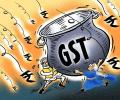
With Goods and Services Tax (GST) officers under pressure to exceed the Rs 1-trillion collection mark per month, industry has faced a barrage of recovery notices and summons issued over the last one month across sectors, according to company executives. Industry bodies have claimed harassment by field officers, blocking of input tax credit, cancellation of GST registration, threats of arrest and steep penalties, impacting their working capital and operations. Company executives pointed at an atmosphere of apprehension and fear due to such notices and summons.

A record GST tax collection, an overhaul of the income tax return filing portal and the landmark move to scrap retrospective taxation have set the stage for the next level of reforms in tax administration that include bringing a framework for cryptocurrencies and rationalising the GST rate structure. With tax reforms such as faceless assessment taking roots, 2021 will go down as the year that pivoted the tax administration in a country aspiring to become the world's favourite investment destination. The task ahead is going to be a tough one as the tax department would grapple with taxing cryptocurrencies, rationalising Goods and Services Tax (GST) rates to shore up revenues and post June 2022, the scenario of how the GST revenue plays out for states without the Centre's support of compensation.

Experts said this will mean that companies, which have offices in multiple states, will have to raise Goods and Services Tax invoice for functions performed by employees in head office that has helped branches in other states.

The GST Council had given the option to real estate companies to either opt for old rates of 12% (for residential) and 8 per cent (affordable housing) with ITC benefits or the new tax rates of 5% for residential units and 1% for affordable housing without the benefit of adjusting the credit on inputs used during construction.

The I-T department issued a circular allowing manual filing of Form 15CA/15CB (required for foreign remittances) with banks till June 30, so that business transactions may go on. The forms will be uploaded online on the e-filing portal later, it added.
 © 2026 Rediff.com - Advertise with us - Disclaimer - Privacy Policy - Sitemap - Feedback - About us - Terms of use - Grievances